
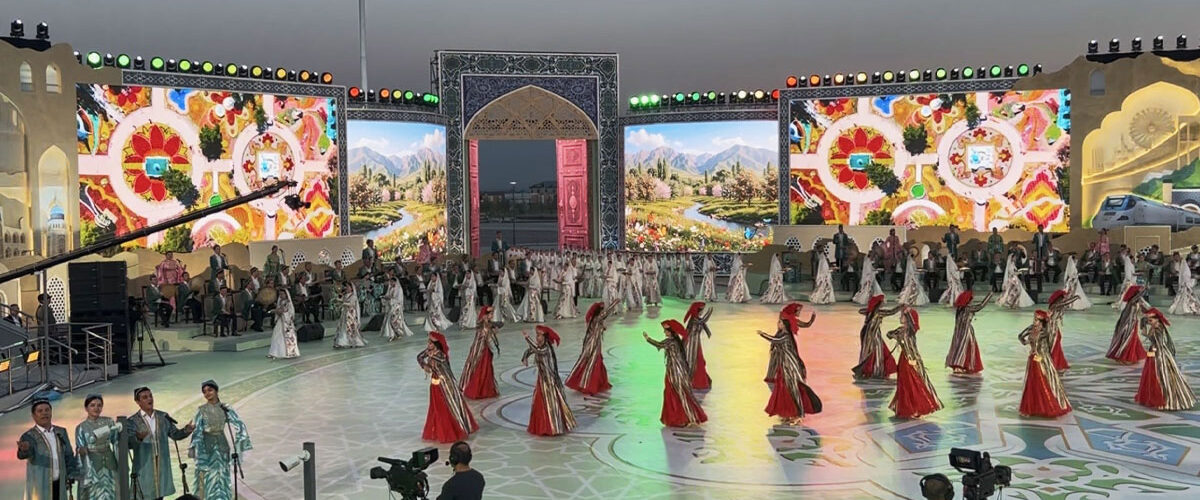
Third International Maqom Festival in Namangan, Uzbekistan, 23-25 June 2026
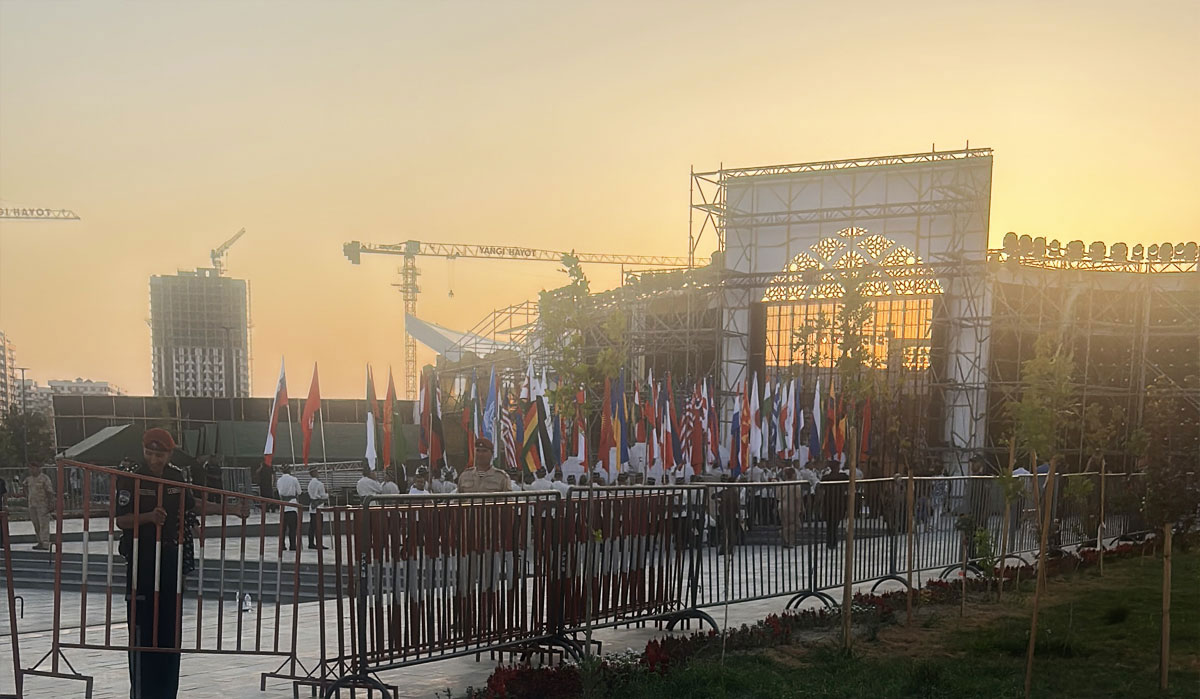
The opening ceremony
TThis third edition of Uzbekistan’s Maqom Festival, held in the city of Namangan, provided another extraordinary display of song, dance, and pageantry. The spectacular opening ceremony showcased many of Uzbekistan’s finest musicians, dancers and singers, who came from across the country to perform. Reflecting the close links between festivals and infrastructure development in Central Asia, the Maqom Festival was held in a huge arena on the edge of Namangan, in the middle of the recently opened New Uzbekistan Park, surrounded by construction sites where multistorey residential buildings are springing up.
The political will driving this festival was on display in the accompanying international conference, which opened with speeches from more than a dozen officials from the Ministry of Culture, local government, and an array of Turkic friendship organisations. The President himself spoke at the festival’s opening ceremony, announcing plans to build a grand new architect-designed Maqom Centre in Tashkent, to ecstatic applause from the assembled crowd.
The international maqom competition that forms a central part of the festival took a highly inclusive approach to the concept of maqom, admitting a dizzying array of musical styles, from Korean pansori to Mongolian khoomei (Tserendavaa Tsogtgerel) and glam rock-style Qawwali from Pakistan’s Khumariyaan.
But there were also plenty of maqām-based groups, with an emphasis on female vocalists. Last year’s winners from Tajikistan returned with a new vocalist; there was a brief set from a fine singer from Türkiye (Asude Celebiog’lu), and another outstanding vocalist from Azerbaijan (Kamiel Nabiyeva) who scooped joint first prize. The most extraordinary moment of the festival, however, was the appearance of a group from Damascus led by the respected Sufi leader and singer, Sheikh Hamed Dawood, complete with a regal bearded dervish who whirled around the stadium as if he owned it and attempted to conduct the bemused audience in chanting the zikr, “Allah hu!”
Sheikh Hamed Dawood performing at the festival
____________________________
Links to earlier posts:
The Second International Maqom Festival, held in Zamin, 2024
Sirojiddin Juraev and Khurshed Ibrohimzoda, winners of the 2024 Maqom Festival, performing at SOAS
Tags: International Maqam Festival 2026, Maqam, Namangan, Uzbekistan