
Post Tagged with: "Mugham"
-
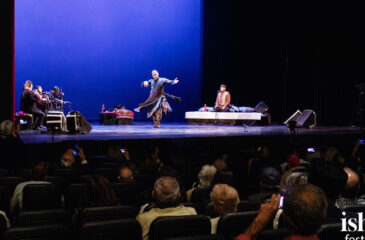
“Sema” -a dance collaboration between Sashar Zarif and Alim Qasimov
29-30 April 2026, Azerbaijan National Conservatory, Baku As part of the “Mugham Beyond Borders” symposium at the Azerbaijan National Conservatory in April 2026, we invited Sashar Zarif to share his research and to present a curated excerpt from “Dancing Mugham,” the path-breaking collaboration between two great artists born on different sides of the Azerbaijan-Iran border. Alim Qasimov was born 1957 in a small Soviet commune north of Baku. He was […]
-
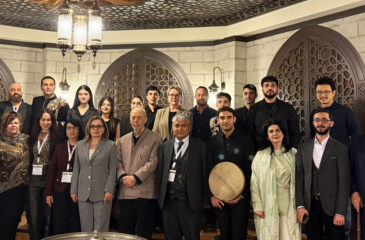
Azerbaijani Mugham across Borders
On April 29-30, 2026, “MAQAM” members Polina Dessiatnitchenko and Rachel Harris, in collaboration with the Azerbaijan National Conservatory (hereafter ANC) and the ICTMD “Maqam” group, organized an international symposium “Azerbaijani Mugham Across Borders.” The two-day event featured a keynote speech by Jean During, individual papers, heated debates, and wonderful music performed by students from the ANC. The opening ceremony commenced with a speech by the Rector of ANC, Kamila Dadashzade […]
-

“They Took the Heart of Mugham!”
“They Took the Heart of Mugham!” Azerbaijani Musicians Finding Authenticity in Iranian Traditions by Polina Dessiatnitchenko The performance is remarkable for many reasons. On the centerstage of the Mugham Center in Baku, Azerbaijan, singer Fergana Gasimova is sitting cross-legged, and as she sings, her body sways sideways, her eyes close in ecstasy, her arms thrust upward, and her head moves poignantly to the well-defined poetical meters. Instead of the usual Azerbaijani instruments, […]
-

Strand 5: Post-Soviet Muslim transnational musical subjectivities
Polina Dessiatnitchenko This strand focuses on how mugham is part of the current increasing ties between Azerbaijan, Iran, Turkey and other regions in the Muslim world, and the emergence of post-Soviet Muslim transnational musical subjectivities. Significant aspects of the revival in Azerbaijan include the reintroduction of neutral tones, efforts to rediscover lost repertoire, new discourses around Divine love (ishq); emphasis on the prosodic meters (‘arūḍ) and spiritual meanings of the ghazal […]